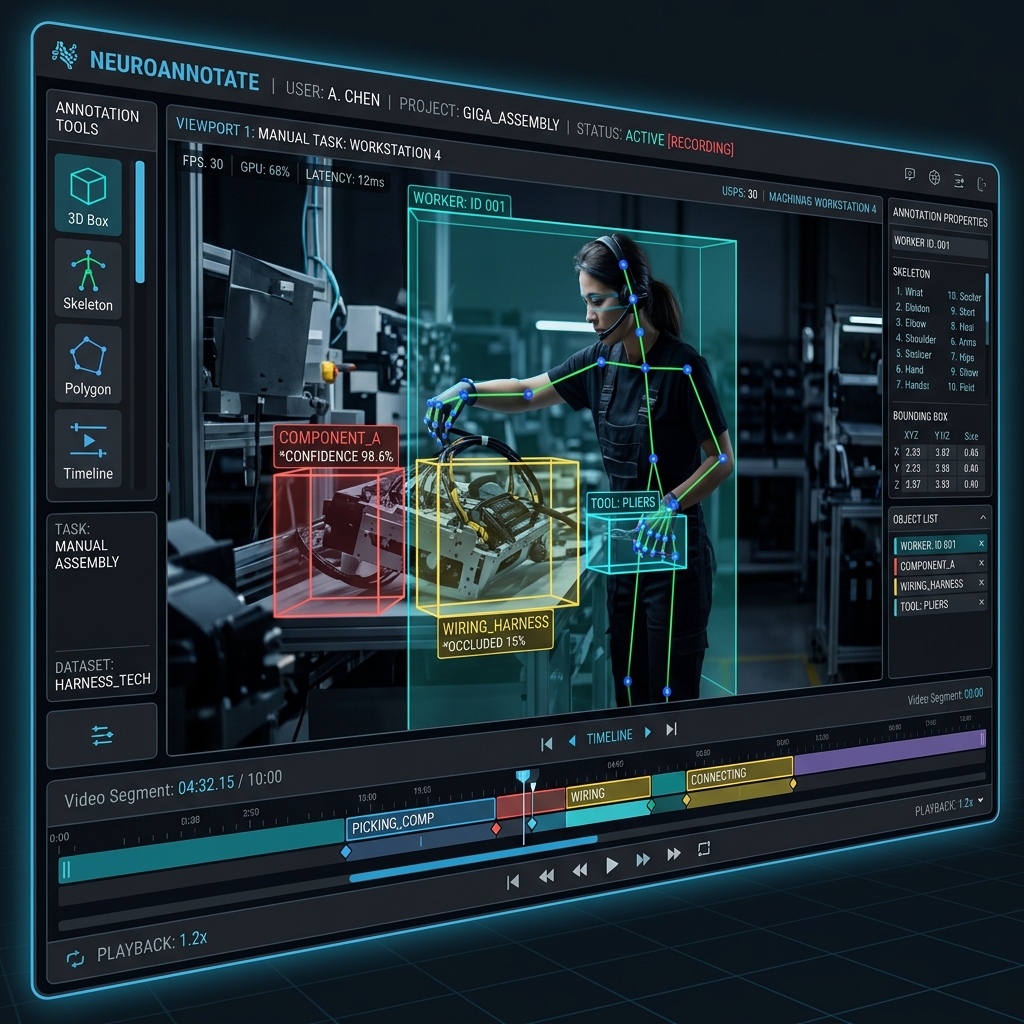
Define a stable clip identity
Every asset needs a stable clip_id linked to source capture, task, environment, and timestamps.
Stable identities make deduplication, issue tracking, and model lineage easier.
Describe the task at useful resolution
A broad task label is a starting point. Action, object, hand used, phase, and success status make the dataset more useful for filtering.
Teams should only request fields that connect to real training or evaluation decisions.
Expose capture and quality fields
Camera view, frame rate, resolution, occlusion, lighting, and quality score help buyers understand usable coverage.
Quality flags should be defined with examples so reviewers apply them consistently.
Track privacy and delivery status
Consent reference, anonymization status, annotation status, and delivery version belong alongside technical metadata.
This makes the package easier to inspect across engineering, legal, and procurement workflows.