Why deformable objects are difficult
Fabrics, bags, cables, and flexible packaging change shape continuously. Their state is harder to infer than a rigid object's pose.
Human demonstrations reveal grasp changes, tension, hand coordination, and recovery behaviors that staged snapshots miss.
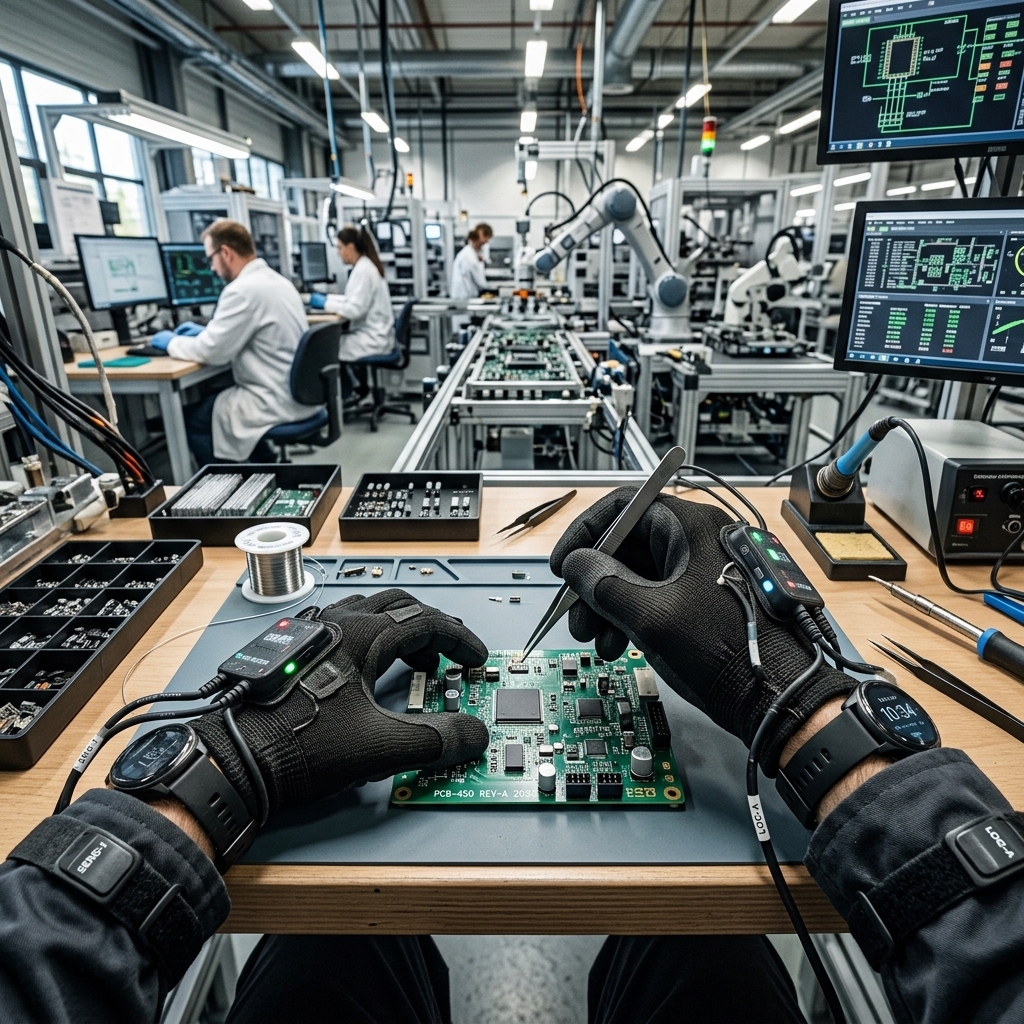
Capture both hands and the workspace
An egocentric view captures hand intent while an exocentric view preserves object state and workspace context.
Camera placement should minimize hand occlusion without forcing people into unnatural movements.
Annotate phases and state changes
Useful labels can include reach, grasp, tension, fold, align, release, and task success. Object-state notes help teams isolate transitions.
The schema should stay narrow enough to annotate consistently across a pilot.
Scale only after sample review
Review a small delivery for task completeness, camera coverage, state visibility, and label agreement before increasing hours.
This catches collection issues while they are still inexpensive to fix.